Processes
JACAN Powder Equipment
Advanced LFP Dry Ultrafine Grinding & Classification Solutions
We deliver complete LFP (Lithium Iron Phosphate) cathode material processing solutions for sintered, pre-ground and rework powder lines, supporting high-quality cathode material production for power batteries and energy storage. Our integrated systems combine low-contamination conveying, agglomerate dispersion, metal impurity removal, dry ultrafine grinding, precision air classification and intelligent closed-loop quality control, ensuring stable micron-grade particle size control for power battery, energy storage and consumer electronics industries.
Dry Ultrafine Grinding
Jet mills or air classifier mills deliver precise dry ultrafine grinding for LFP cathode materials. The grinding process gently disperses sintered soft agglomerates while controlling primary particle size distribution, preserving original particle morphology and tap density. Optional ceramic lining minimizes metal contamination, meeting the strict purity requirements of lithium battery cathode materials.
Precision Air Classification
High-efficiency turbine classifiers achieve sharp cut-point and narrow particle size distribution for LFP powder. Oversized residue above target D97 is tightly controlled to ensure consistent particle morphology and tap density across batches. Real-time particle size monitoring enables stable product quality, meeting the stringent specifications of power battery and energy storage cathode materials.
Low-Contamination Powder Conveying
Fully enclosed negative-pressure conveying system with ceramic or PU-lined pipelines minimizes metal pick-up during LFP powder transfer. The closed design prevents secondary agglomeration and avoids environmental contamination, maintaining powder purity and morphology from grinding to final packaging. Magnetic foreign object control meets lithium battery cathode material cleanliness standards.
Intelligent Closed-Loop Quality Control
Integrated online particle size analysis and automatic regrinding loop ensure every batch of LFP cathode powder meets strict specifications. Off-spec powder is automatically returned for reprocessing, eliminating oversized particles and guaranteeing narrow PSD consistency. Full process data traceability supports quality management for power battery and energy storage grade cathode materials.
JACAN Powder Equipment
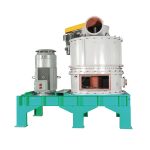
Air Classifier Mill|Integrated Grinding & Classification for LFP Cathode Materials
An integrated grinding and classification system combining impact grinding and built-in air classification in a single unit. Optimized for LFP cathode material processing, capable of precise tuning of target D50 while controlling D97 upper limit to produce powder with narrow particle size distribution. Suitable for medium-fineness LFP production for energy storage and power battery applications.
Integrated Grinding & Classification
The air classifier mill integrates impact grinding and dynamic air classification into one compact unit, removing the requirement for separate external classifier and connecting ductwork. It pulverizes LFP (Lithium Iron Phosphate) soft agglomerates generated during sintering, effectively dispersing particle clusters while minimizing damage to primary particle structure. LFP agglomerates are broken by high-speed rotating hammers, then immediately sorted by the built-in turbine classifier. Fine particles discharge with airflow, while oversized agglomerates fall back for regrinding. This closed-circuit layout reduces equipment investment, plant footprint and overall energy consumption compared with split mill-classifier configurations, delivering stable particle characteristics for LFP cathode materials.
On-Line Particle Size Adjustment
Built-in turbine classifier speed is fully adjustable via frequency converter. Operators can modify target D50 and D97 threshold without stopping production. Particle properties can be precisely calibrated to satisfy diverse specifications for power batteries, energy storage and consumer electronics LFP.
Water-Cooled Temperature Stabilization
Grinding chamber and classifier housing can be equipped with water-jacket cooling to dissipate frictional heat generated during impact grinding. Stable operating temperature suppresses electrostatic secondary agglomeration of powder and reduces oxidation risk of ferrous ions, maintaining original particle morphology and consistent electrochemical performance of LFP.
Ceramic Lining for Low Metal Contamination
Optional full ceramic lining for grinding chamber, hammers and classifier wheel reduces contamination caused by metal wear. It achieves low-level metal contamination at ppm scale and helps maintain high purity of LFP powder, meeting strict standards for high-end power battery and energy storage grade materials.
Narrow Particle Size Distribution
High-precision built-in turbine classifier delivers sharp particle cut-off and strict control over oversized particles. The finished LFP powder features narrow PSD and stable D97 values, supporting consistent dispersion and stable electrochemical performance during electrode coating and battery manufacturing.
Negative Pressure Dust-Free Operation
The whole system operates under slight negative pressure in a fully closed circuit equipped with cyclone separator and bag dust collector. LFP dust leakage is minimized during production, complying with environmental regulations, reducing material loss and preventing moisture absorption by powder.
Application Limitations
Optimized for medium-fineness LFP processing. It is not cost-effective for ultrafine LFP requiring D97 below 5μm, where jet mills deliver higher efficiency and finer particle size. Standard steel-lined units cannot meet low-contamination requirements for high-purity power battery grade LFP.
Supporting Equipment
JACAN Powder Equipment
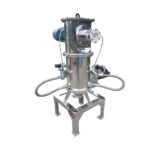
Fluidized Bed Opposed Jet Mill|Ultrafine Grinding for High-Purity LFP Cathode Materials
A high-purity ultrafine grinding system adopting fluidized bed opposed jet technology for premium LFP (Lithium Iron Phosphate) cathode material production. Particle-on-particle collision grinding achieves extremely low metal contamination and ultrafine particle size, ideal for high-end power battery and energy storage grade LFP.
Low Contamination Particle-on-Particle Grinding
The fluidized bed opposed jet mill uses multiple groups of opposed high-speed compressed air nozzles to accelerate particles to supersonic velocity. Particles collide and grind against each other rather than impacting metal surfaces. It pulverizes soft agglomerates generated during sintering, effectively dispersing particle clusters while minimizing damage to primary particle structure. This mechanism greatly reduces metal contact during grinding and delivers ultra-low heavy metal and metal impurity content, meeting strict purity standards for high-end LFP.
Controllable Ultrafine Particle Size
Equipped with a high-precision vertical turbine classifier, the system stably produces LFP powder with adjustable particle size within D97 3–10μm range. Finer particle size improves particle dispersion in electrode slurry and enhances consistency of electrochemical performance in finished lithium batteries.
Natural Low-Temperature Grinding Environment
Compressed air expands rapidly at nozzle outlets and absorbs heat, forming a natural low-temperature grinding environment. Material temperature is typically kept below 80°C throughout processing. Low temperature suppresses electrostatic secondary agglomeration of powder and reduces oxidation risk of ferrous ions, maintaining stable particle morphology and electrochemical performance.
Sharp Cut-Point & Narrow PSD
Built-in high-precision turbine classifier delivers extremely sharp particle cut-off and strict control over oversized particles. The finished LFP powder achieves very narrow particle size distribution and stable D97/D50 ratio, ensuring consistent processing characteristics and predictable electrochemical performance in downstream battery manufacturing.
Full Ceramic Wear Protection
All material contact surfaces including grinding chamber, nozzles and classifier wheel can be lined with high-purity alumina or zirconia ceramics. It further reduces contamination risk and extends service life, suitable for long-term continuous production of high-purity premium LFP grades.
Modular Design & Easy Maintenance
Modular framework equipped with quick-release flanges and accessible inspection ports. Wear parts can be replaced rapidly without extensive disassembly, reducing downtime and maintenance cost for high-value LFP production lines.
Application Limitations
Optimized for high-value fine LFP (D97 3–10μm). Not economically viable for coarse particle processing; high compressed air consumption makes it less competitive for large-volume mass production scenarios where medium-fineness grinding equipment delivers better overall economy.
Supporting Equipment
JACAN Powder Equipment
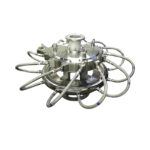
Spiral Jet Mill|Cost-Effective Medium-Fineness Grinding for LFP Cathode Materials
A compact spiral jet mill designed for medium-fineness LFP (Lithium Iron Phosphate) cathode material processing. Tangential high-speed airflow enables particle-on-particle impact grinding with low contamination, delivering stable particle characteristics within D97 5–45μm. Under identical fineness requirements, it achieves higher unit throughput compared with fluidized bed opposed jet mills, ideal for mid-scale LFP production lines for power battery and energy storage.
Higher Unit Throughput Among Jet Mills & Low Operating Cost
The spiral jet mill adopts a flat disc grinding chamber equipped with multiple tangential compressed air nozzles to form powerful vortex flow, accelerating particles to high velocity for efficient particle self-collision grinding. It pulverizes soft agglomerates generated during sintering, effectively dispersing particle clusters while minimizing damage to primary particle structure. Within the medium-fineness range D97 5–10μm, it delivers superior unit throughput compared with fluidized bed opposed jet mills, while specific compressed air consumption can be optimized. The simple flat-disc structure lowers initial investment and routine maintenance expenditure, making it a cost-effective jet mill option for LFP grades in D97 5–15μm range.
Natural Low-Temperature Grinding Environment
High-speed compressed air expands rapidly at nozzle outlets and absorbs heat, forming a natural low-temperature grinding environment. Material temperature is typically kept below 90°C throughout processing. Low temperature suppresses electrostatic secondary agglomeration of powder and reduces oxidation risk of ferrous ions, maintaining stable particle morphology and electrochemical performance.
Simple Structure & Easy Maintenance
Compact flat-disc layout with very few moving components; only the classifier wheel rotates. Wear parts are easily accessible and can be replaced quickly, minimizing downtime and maintenance expenditure for LFP production facilities of all scales.
Full Ceramic Lining for Low Contamination
Grinding chamber inner wall, nozzles and classifier wheel can be lined with high-purity alumina or zirconia ceramics. It reduces contamination caused by metal abrasion, preserving high purity of LFP powder to satisfy most power battery and energy storage application requirements.
Wide Adjustable Medium-Fineness Range
Equipped with built-in turbine classifier, the mill delivers continuously adjustable fineness within D97 5–45μm. This broad medium-fineness range covers most conventional specification requirements for LFP cathode materials used in power batteries and energy storage systems.
Negative Pressure Dust-Free Operation
The whole system runs under slight negative pressure within a fully closed circuit with cyclone separator and bag dust collector. LFP dust leakage is minimized during production, complying with environmental regulations, reducing material loss and preventing powder moisture absorption.
Application Limitations
Optimized for medium-fineness LFP processing (D97 5–45μm). Unable to achieve ultrafine specifications below D97 3μm, which requires fluidized bed opposed jet mills. Particle size distribution is slightly wider compared with fluidized bed jet mills for high-precision applications. Overall throughput is lower than air classifier mills for large-scale mass production.
Supporting Equipment
JACAN Powder Equipment
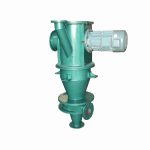
Air Classifier|Precision Air Classification for LFP Cathode Powder
This equipment performs only precision particle size separation — it does not provide grinding function and must operate in closed circuit with a grinding mill to form a complete LFP powder production system. Equipped with high-speed turbine classifiers, it delivers sharp cut-off and narrow size distribution, working alongside grinding mills to secure stable product quality for power battery and energy storage cathode material applications.
Sharp Cut-Point & Narrow Particle Size Distribution
The air classifier utilises a high-speed rotating turbine wheel to generate a strong centrifugal field that separates LFP particles precisely by dimension. Fine particles pass through turbine gaps and exit with airflow, while oversized particles are thrown outward by centrifugal force and fall back for regrinding. It achieves sharp particle cut-off and strict control over oversized particles. For LFP cathode material applications, narrow particle distribution ensures consistent dispersion, uniform electrochemical performance and predictable processing behaviour during electrode coating and battery manufacturing, eliminating batch-to-batch quality fluctuation.
On-Line Particle Size Adjustment
Turbine classifier speed is fully adjustable via frequency converter. Operators can modify LFP product fineness during continuous production without shutdown. Particle characteristics can be precisely tuned within D97 3–45μm range to match diverse product specifications and application requirements.
Closed-Circuit System Efficiency Boost
When paired with grinding mills in closed-circuit configuration, the classifier returns oversized LFP particles for regrinding promptly, avoiding excessive grinding of fine fractions and reducing energy waste. This closed-loop layout improves overall production efficiency of the whole system compared with open-circuit grinding processes.
Ceramic Lining for Low Metal Contamination
All material contact surfaces including classifier wheel, chamber lining and inlet/outlet ducts can be lined with high-purity alumina or zirconia ceramics. It reduces contamination generated by metal abrasion, helping maintain high purity of LFP powder for high-end power battery and energy storage grade applications.
Dual Configurations for Diverse Demands
Available in vertical eddy current and horizontal turbine configurations. Vertical models deliver higher throughput for conventional general-purpose LFP production, while horizontal models offer enhanced classification precision for fine and ultrafine LFP grades.
Stable Operation & Low Maintenance
The classifier features a robust mechanical structure, dynamically balanced rotating assemblies and heavy-duty bearing systems. It runs continuously with low vibration and limited maintenance requirements, supporting stable long-term operation inside LFP production lines and minimising unplanned downtime.
Application Limitations
The air classifier only performs particle size separation and has no grinding function. It must operate in closed circuit with grinding equipment to build a complete production system. Classification efficiency and throughput decline significantly for ultrafine LFP below D97 5μm; consistent feed particle size and concentration are required to maintain stable classification performance.
Supporting Equipment
JACAN Powder Equipment
Global Project Highlights & Customer Sites
Our high-performance LFP (Lithium Iron Phosphate) cathode material processing lines operate across global lithium battery, energy storage and new energy manufacturing hubs. Custom dry ultrafine grinding, precision air classification and low-contamination conveying systems ensure stable production, helping clients produce LFP powder with narrow particle size distribution, low metal contamination and high tap density that meets international lithium battery industry quality standards.


